Last updated November 21, 2026
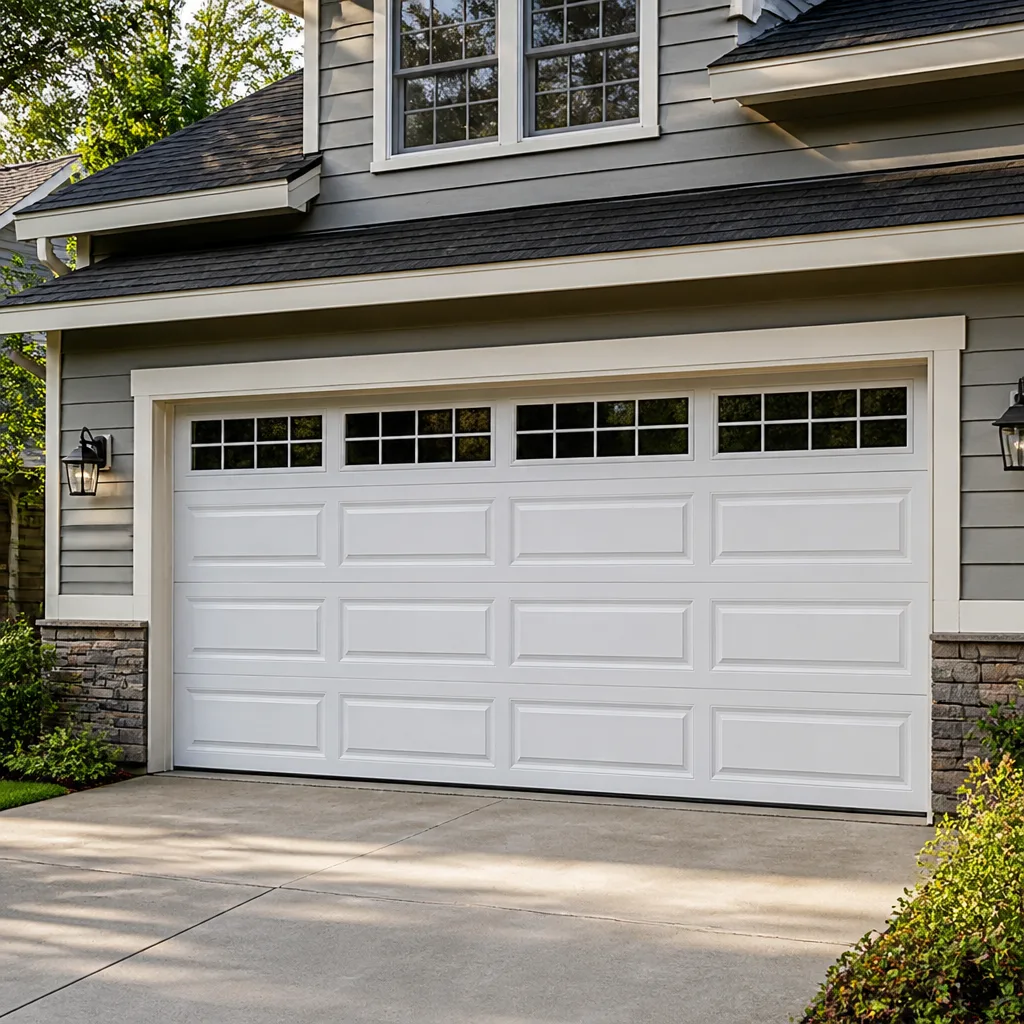 Raised-panel steel
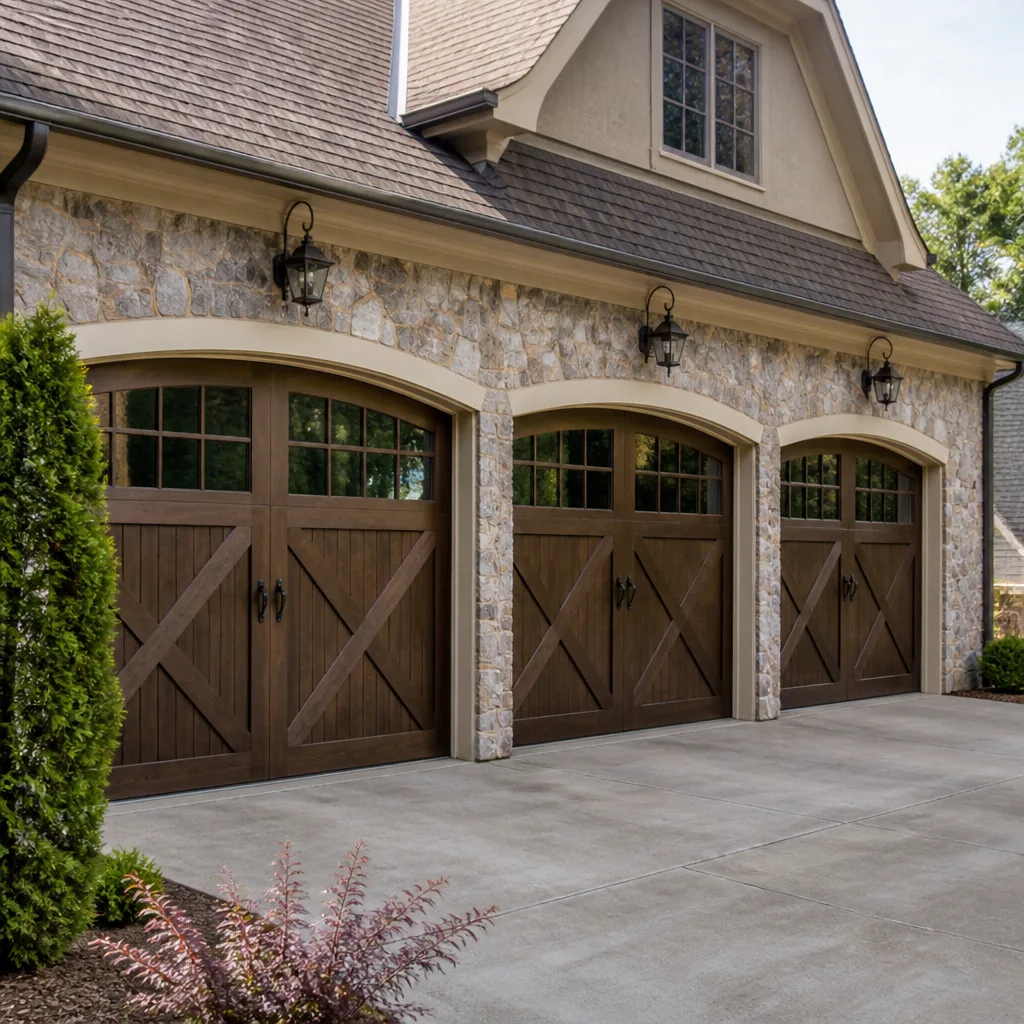 Carriage house
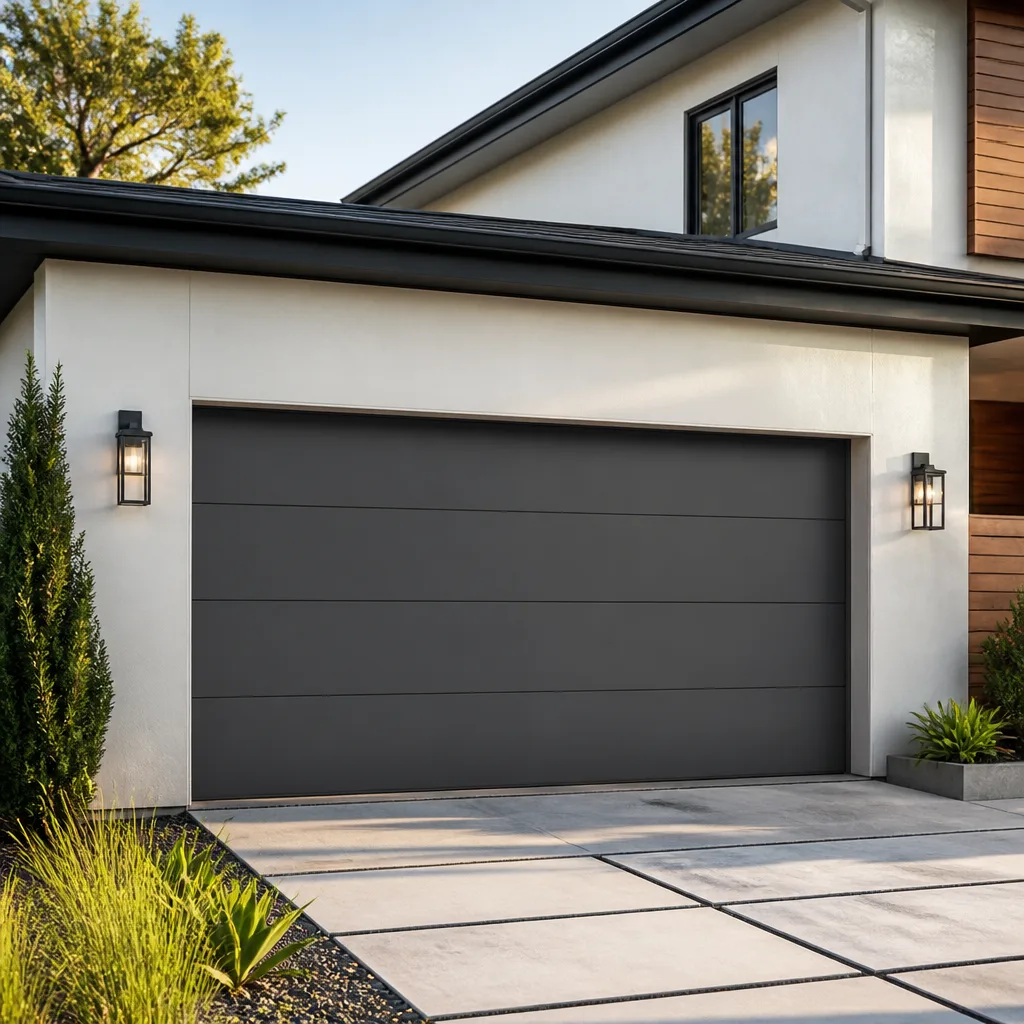 Modern flush
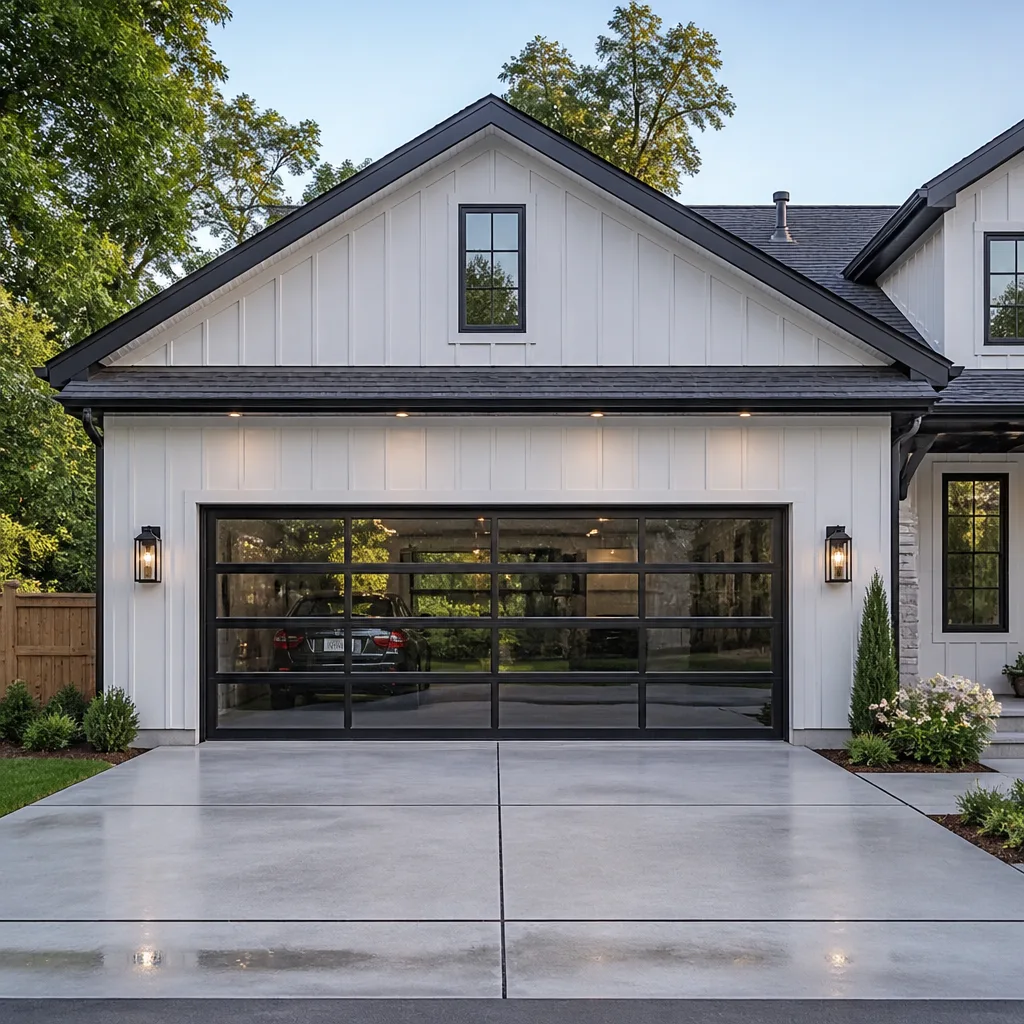 Full-view glass
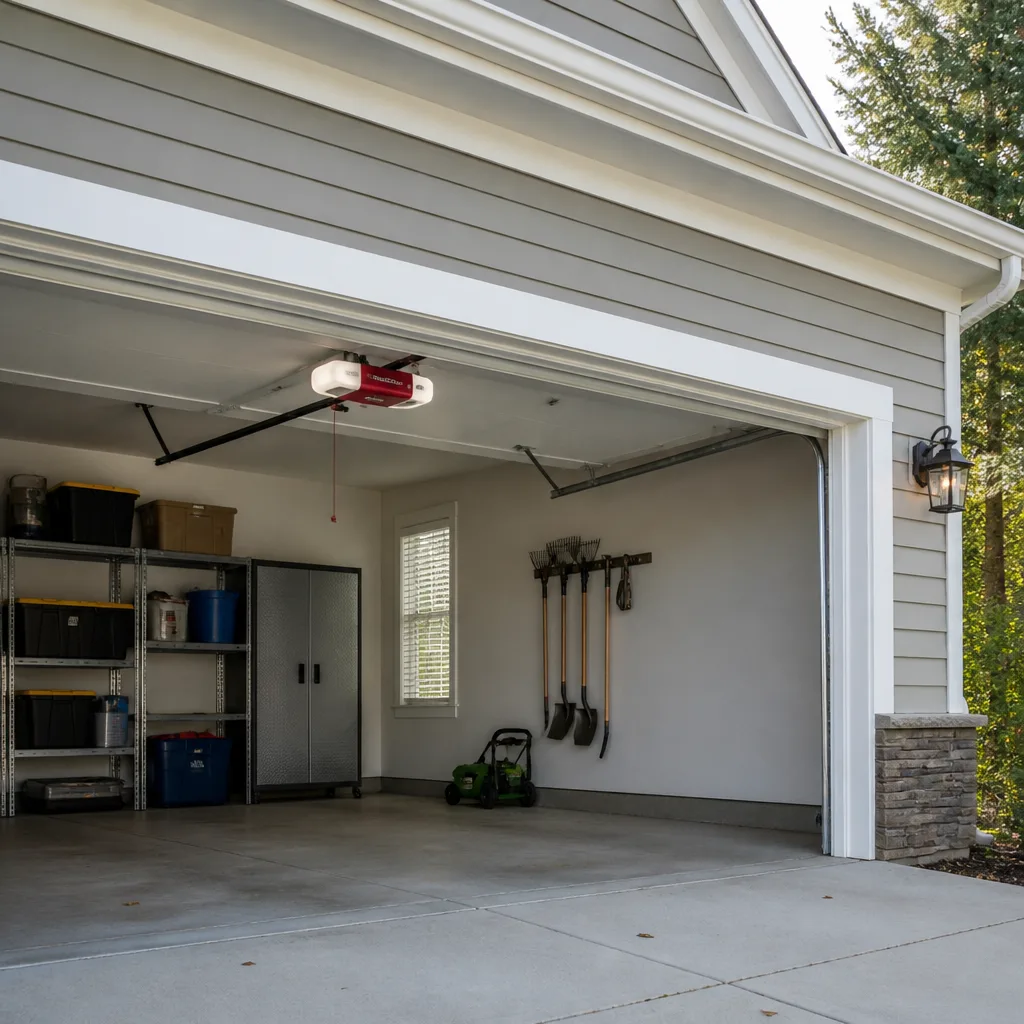 LiftMaster openers
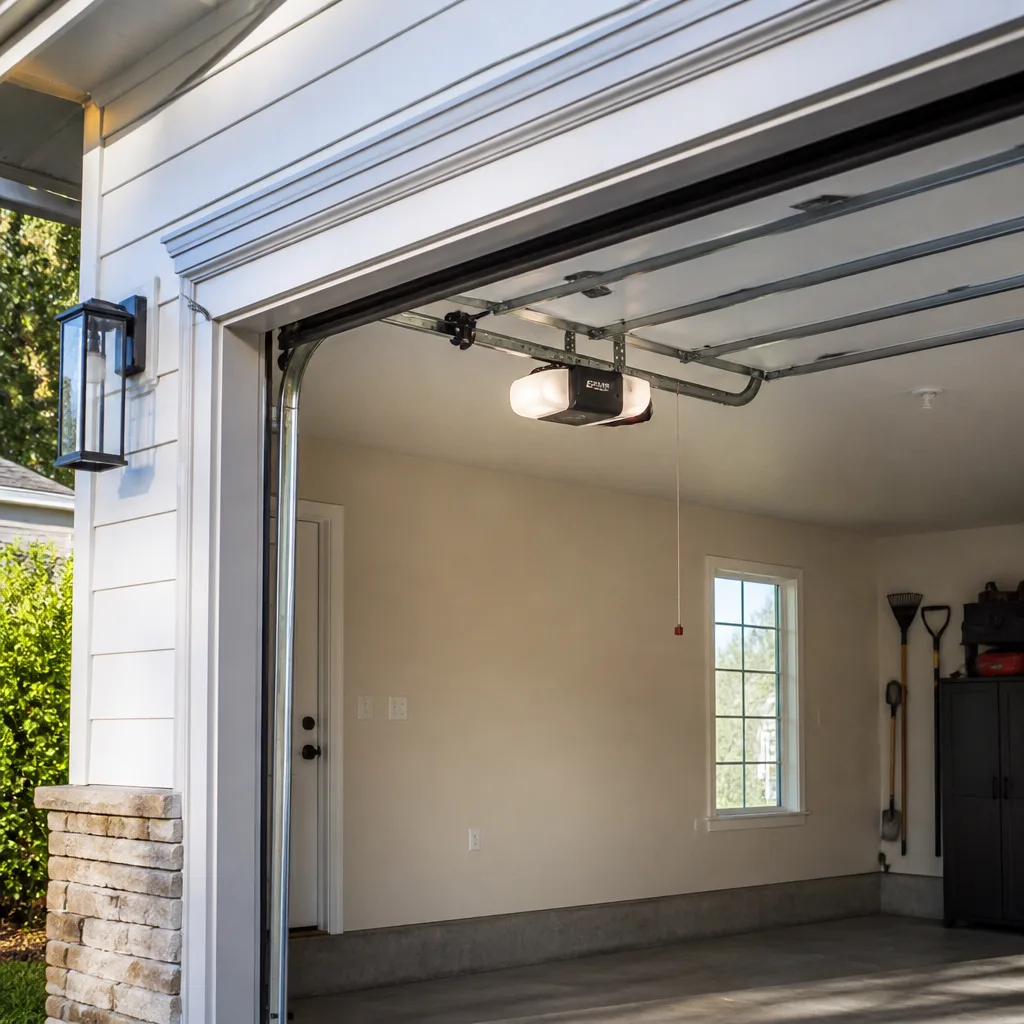 Chamberlain openers
Full 25-point door and opener safety check with every visit - springs, cables, rollers, tracks, and your LiftMaster or Chamberlain opener included
You get a price before we start. It does not change when the pro arrives.
Get your free estimateThe Complete Guide to Garage Doors in Roslindale
Most “complete guides” to garage doors are written for a suburb full of identical ranch homes. Roslindale isn’t that place. Walk a few blocks here and you pass Victorian two-families with narrow carriage bays, 1950s brick colonials with shallow garages tucked under the house, triple-deckers where the garage was squeezed onto a side lot, and new infill construction working around lot lines that were drawn a century ago. Each of those homes has different clearance, different door weights, and a different idea of what looks right. The door and opener that make perfect sense on one street are a bad fit on the next.
This guide maps the real decisions – door type, material, opener, repair versus replace, permits – to the housing stock you actually find in Roslindale. By the end you’ll know what your garage can physically take, what your home’s era calls for, and how to size up your existing setup before you spend anything.
Quick Answer
The right garage door in Roslindale depends less on fashion than on your home’s era and your garage’s physical dimensions. Older Victorians and two-families usually need a lighter, better-fitting door and a heavier-duty opener with proper headroom and side-room clearance, while newer infill homes often suit standard sectional steel and a modern belt-drive opener. Almost every replacement needs a permit through the City of Boston, so plan for inspection as part of the job, not an afterthought.
Styles & brands we work with
- Raised-panel steel
- Carriage house
- Modern flush
- Full-view glass
- LiftMaster openers
- Chamberlain openers
Table of Contents
- How Roslindale’s Housing Stock Shapes Your Garage Door Choice
- Low-Headroom and Side-Room Constraints in Older Roslindale Garages
- Material Matchmaking for Roslindale’s Winters and Architectural Eras
- Standard Openers vs. What Heavy Carriage-Style Doors Need
- Permits and Code for “Simple” Replacements in Boston
- How to Audit Your Existing Setup Before You Spend
- Repair or Replace? A Decision Framework
- The Parts You Should Never Touch Yourself
How Roslindale’s Housing Stock Shapes Your Garage Door Choice
Roslindale’s homes were built across roughly a century of construction, and garage doors were often added long after the house went up – or retrofitted into spaces that were never designed for a car. That’s why we start every conversation with the building, not the catalog.
Here’s how the main eras break down and what each one typically demands:
- Victorian two-families and singles: Narrow bays, decorative trim, and often a carriage-style door that’s heavier than it looks. These homes reward a door that fits the opening precisely and hardware that can carry the weight. Aesthetics matter here because the garage often faces the street.
- 1950s brick colonials: Garages are frequently shallow or tucked under the main roofline, so headroom is the constraint. A low-profile sectional or a door built for tight clearances usually works better than a standard track setup.
- Triple-deckers with side-lot garages: The garage was often an afterthought – a slab, three walls, and whatever door fit. Expect uneven openings, limited side room, and a need for careful measuring before ordering anything.
- Newer infill construction: Tighter lot lines but modern framing. These garages usually accept standard sectional steel doors and contemporary openers without drama, though matching the door style to the house still matters.
The lesson: in Roslindale, the door decision follows the building. If you’re starting with a Roslindale Garage Door Repair assessment, we measure the opening, check the framing, and confirm clearances before recommending a type. Ordering first and fitting later is how projects stall.
Low-Headroom and Side-Room Constraints in Older Roslindale Garages
Headroom and side room are the two numbers that quietly decide what you can install, and older Roslindale garages are where they cause the most trouble. Headroom is the distance from the top of the door to the ceiling. Side room is the space between the door edge and the wall. Get either too small and whole door categories fall off the table.
Here’s a practical way to think about the fit:
- Measure headroom first. Standard track systems need a set amount of overhead clearance to run the door up and away. If your ceiling sits low, a low-headroom track or a torsion setup in the right configuration can work where a standard track won’t.
- Then measure side room. Torsion springs and their hardware occupy space beside the door. In a tight side-lot garage, that may mean a different spring configuration or a repositioned track.
- Check the back room. How far the door travels back into the garage matters just as much. A door that needs to fold further than your garage allows will hit the wall or the car.
- Confirm the opener’s needs. Some openers, particularly jackshaft styles, depend on side room and a torsion shaft. If you’re short on overhead space, the opener choice follows the door choice.
- Order only after the measurements are locked. A door built to the wrong clearance is a door that doesn’t fit, and older garages rarely forgive that.
We see this constantly in Roslindale – a homeowner picks a beautiful door online, then discovers the ceiling is too low for the track it needs. Measuring first saves the return and the reorder. If a garage is tight on both headroom and side room, a specialist can usually find a configuration that works, but it has to be planned on site.
Material Matchmaking for Roslindale’s Winters and Architectural Eras
Roslindale winters are cold, wet, and long on freeze-thaw cycles, and that shapes material choice as much as aesthetics do. A door that looks great in a showroom photo can be the wrong call for a north-facing garage on an older house.
Here’s how the main materials stack up against local conditions and home styles:
- Steel: The workhorse for newer and mid-century homes. Insulated steel handles winter well, holds its finish, and is usually the most cost-effective for a standard sectional. It suits the cleaner lines of 1950s colonials and infill construction.
- Wood composite: Borrows the look of real carriage wood with better resistance to moisture. A strong fit for Victorian-era homes where a painted timber look belongs, though it needs care to stay looking right over wet winters.
- Aluminum: Lightweight and rust-resistant, good for full-view and modern designs, but less insulating and better matched to contemporary homes or specific architectural styles than to a heavy traditional bay.
Brands matter here because fit and finish vary. Clopay and Amarr both make lines suited to traditional residential styles, and Wayne Dalton covers the standard and insulated steel end of the market well. Matching the material profile to the house’s era – and to how much insulation the garage needs in a Boston winter – is worth more than picking purely by color.
One misconception we clear up often: a heavier or thicker door isn’t automatically better. A too-heavy door on an old opening stresses the springs, the track, and the opener. The right material is the one the structure can carry.
Standard Openers vs. What Heavy Carriage-Style Doors Need
A standard residential opener is built for a standard sectional door – moderate weight, balanced springs, and a predictable lift. Many of Roslindale’s older homes carry something heavier, especially the carriage-style doors that suit Victorian architecture, and those doors ask more of the opener than a typical residential unit can give.
What to understand before you choose an opener:
- Balance comes first. A properly balanced door should lift with modest force. If a door is heavy to open by hand, the springs are doing too little work, and no opener should be asked to compensate for that. Fix the balance before the opener.
- Duty rating matters. Heavy doors and frequent use need a unit rated to handle them. A lighter-duty opener on a heavy door wears out faster and can strain the mechanism.
- Jackshaft and side-mount units suit garages with low overhead clearance, working alongside a torsion setup rather than from a ceiling rail. That’s often the right answer for a tight Roslindale garage with a heavy door.
- Control and safety features – the auto-reverse, the safety sensors, the remote and wall controls – should be part of the spec, not an upsell. These are standard on modern units from LiftMaster, Chamberlain, Genie, and Craftsman.
Getting the opener right is a big part of a smooth setup, and it’s one reason we handle garage door opener repair alongside door work rather than as a separate trade. A strong opener on a badly fitted door, or the reverse, just moves the problem around.
Permits and Code for “Simple” Replacements in Boston
Here’s a piece of reality a lot of guides skip: replacing a garage door in Boston isn’t always treated as a simple swap. Even a like-for-like replacement can require a permit, and that changes the job from a weekend project into a sequenced one with an inspection at the end.
Roslindale sits within Boston, so the rules that apply citywide apply here. A few things to know before you order:
- Ask before you buy. Call the City of Boston’s building department or check the current permitting guidance for a residential garage door replacement before ordering. Requirements can depend on the scope and the property.
- Plan the sequence. If a permit and inspection are involved, the job has stages: measure, permit, order, install, inspect. Build that timeline in from the start.
- Keep documentation. Product specs and installation details help the inspection go smoothly, especially for wind-rated or impact-rated components if the property calls for them.
- Use a specialist who plans for it. The permit shouldn’t surface as a surprise after the door is delivered. It should be part of the plan.
We won’t quote specific permit rules because they can change and depend on your property – the honest answer is to confirm with the city’s building department for your address. What we do say is that Roslindale homeowners are better off assuming a permit may be needed and planning for it than being caught off guard mid-project.
How to Audit Your Existing Setup Before You Spend
Before you decide between a repair and a full replacement, audit what you already have. Ten minutes of honest assessment tells you a lot – and a specialist’s on-site evaluation tells you the rest. Here’s the sequence:
- Watch and listen to the door move. A door that jerks, hesitates, or grinds is telling you something about the springs, rollers, or track. Smooth and quiet is the goal.
- Check the balance. Disconnect the opener, lift the door partway by hand, and let go. If it doesn’t hold roughly where you leave it, the springs are likely out of balance. Do this carefully and don’t force anything.
- Inspect the track and rollers visually. Dents, bends, and worn rollers are common in older Roslindale setups. Don’t climb or disassemble anything to look – just observe.
- Look at the springs, don’t touch them. A gap, an obvious break, or visible wear is a signal to call, not to investigate further. Springs under tension are dangerous.
- Test the opener’s safety features. Confirm the safety sensors and auto-reverse work. These protect people and pets, and a failure is worth fixing promptly.
- Note the door’s age and material. An old wooden door with rot or a steel door with rust through tells you the cost balance is shifting.
If you want a hand reading the results, a specialist can evaluate it properly. We’re happy to look and tell you honestly whether you’re facing a fix or a replacement.
Repair or Replace? A Decision Framework
The repair-versus-replace question is where a lot of homeowners get talked into the wrong thing. The honest answer depends on the door’s condition, the cost of the fix, and what you want from the garage. Here’s how we frame it:
- Repair is usually the answer when the door structure is sound, the problem is isolated (a spring, a roller, an opener board), and the rest of the system is in good shape. Fixing one component on a healthy door is money well spent.
- Replacement makes sense when the door is failing in several places at once, the material is at the end of its life, or a repair bill approaches a meaningful share of a new door’s cost.
- The opener is a separate question. You can replace an opener without replacing the door, and vice versa. Don’t let a failing opener pull you into a full replacement if the door itself is fine.
- Insulation can tip the decision. In a cold-winter city, a properly insulated door is worth more than a patch on an uninsulated old one.
For a door that’s genuinely at the end of its life, we handle garage door installation as a full process: measure, recommend, order the right door, and fit it correctly. The decision should be based on what your door actually needs, not on a sales target.
The Parts You Should Never Touch Yourself
Garage doors have components that can hurt you badly if tackled without training, and this is where a specialist matters most. The torsion spring stores enormous force. The cables are under tension. The track and brackets hold everything together. Releasing or working on any of these without knowing exactly what you’re doing can cause serious injury.
What we’ll always tell a Roslindale homeowner:
- Springs are the number one danger. A torsion or extension spring under load can release violently. Don’t try to wind, unwind, or replace one yourself. This is why spring work is often declined by general handymen.
- Cables hold lethal tension. Never cut, loosen, or adjust a lift cable on your own.
- Don’t stand under a misbehaving door. If a spring has snapped or a door hangs unevenly, keep clear and call.
- Leave opener electrical work to a pro. If the opener needs wiring or a new circuit, that’s a job for a qualified technician.
- There’s no shame in calling. A trained specialist does this safely and gets it right.
Spring repair is one of our core services, done by technicians trained for it. Our technicians have up to 14 years of experience. This is the part of the job where “do it yourself” isn’t worth the risk.
Common Mistakes to Avoid
- Ordering a door before measuring clearances. In Roslindale’s older garages, headroom and side room decide what fits. Measure first or you’ll be returning a door that never had a chance.
- Assuming a permit isn’t needed. Boston’s rules can apply even to like-for-like replacement. Check with the building department before you buy, not after.
- Matching the door to a photo instead of the house. A door styled for a new build can look out of place on a Victorian two-family, and the wrong weight can strain old hardware. Match the era.
- Putting a standard opener on a heavy carriage door. It wears out fast and never really works. Match the opener’s duty to the door’s weight.
- Touching the springs. We can’t say it enough – this is the most dangerous part of a garage door, and it’s not a homeowner job.
- Repairing a door that’s failing everywhere. One bad spring is a repair. Rot, rust through, and a failing track at once usually points to a replacement.
- Ignoring the safety features. A failed auto-reverse or dead safety sensor is a real hazard, especially with kids and pets around. Fix it promptly.
See the difference
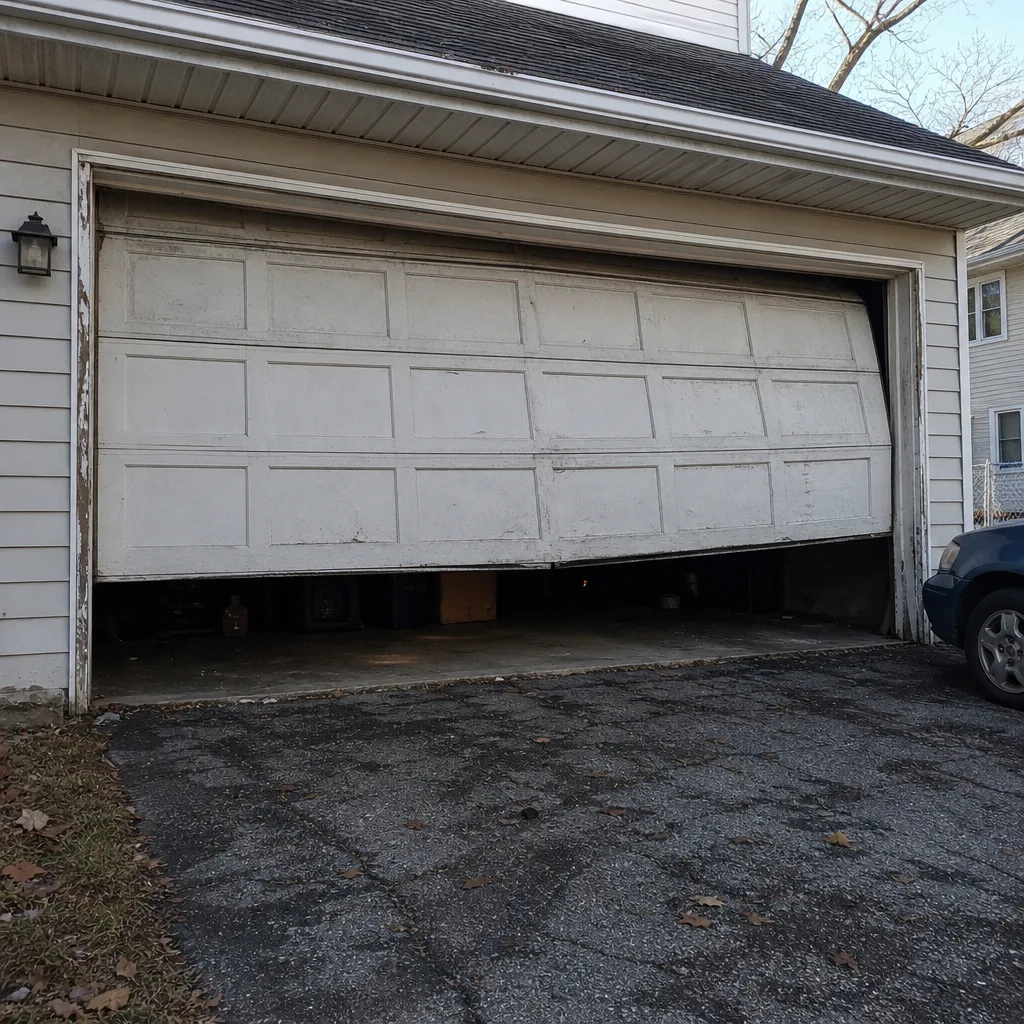 Before
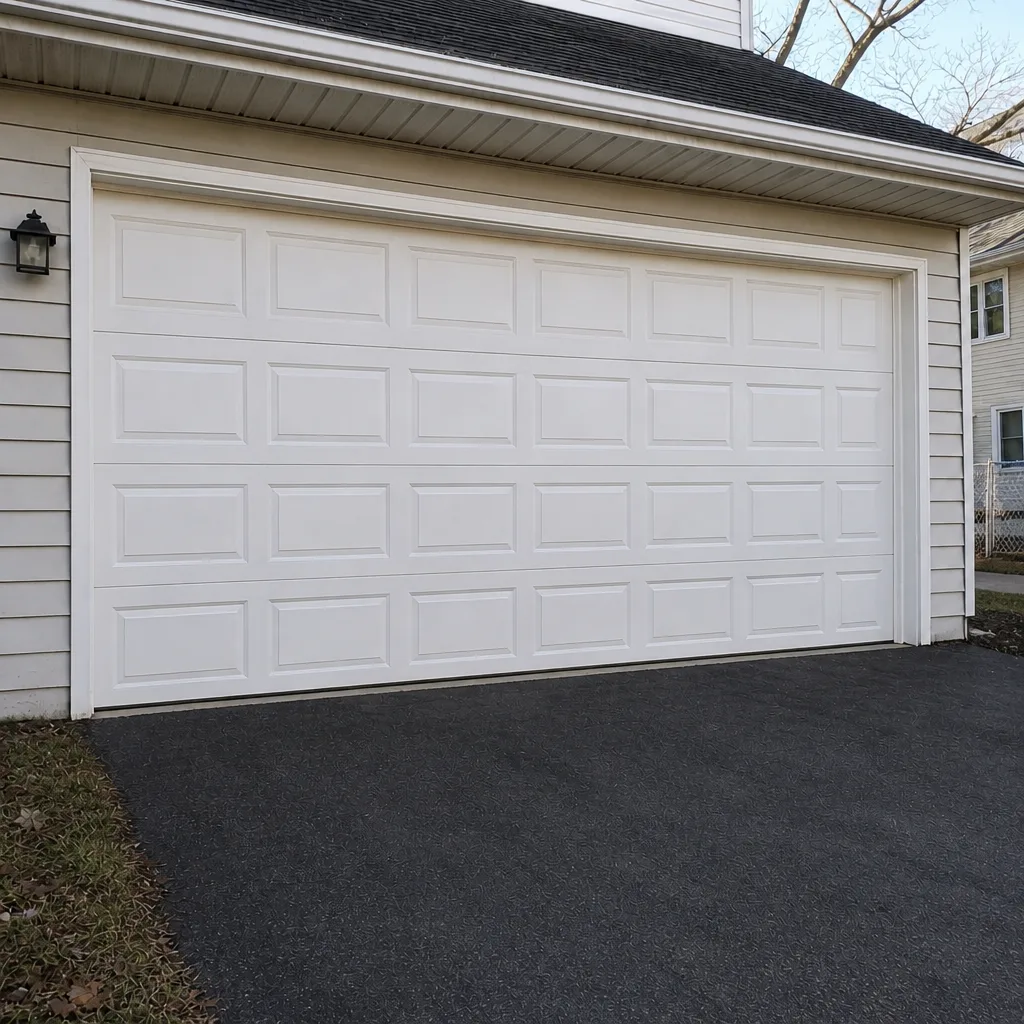 After
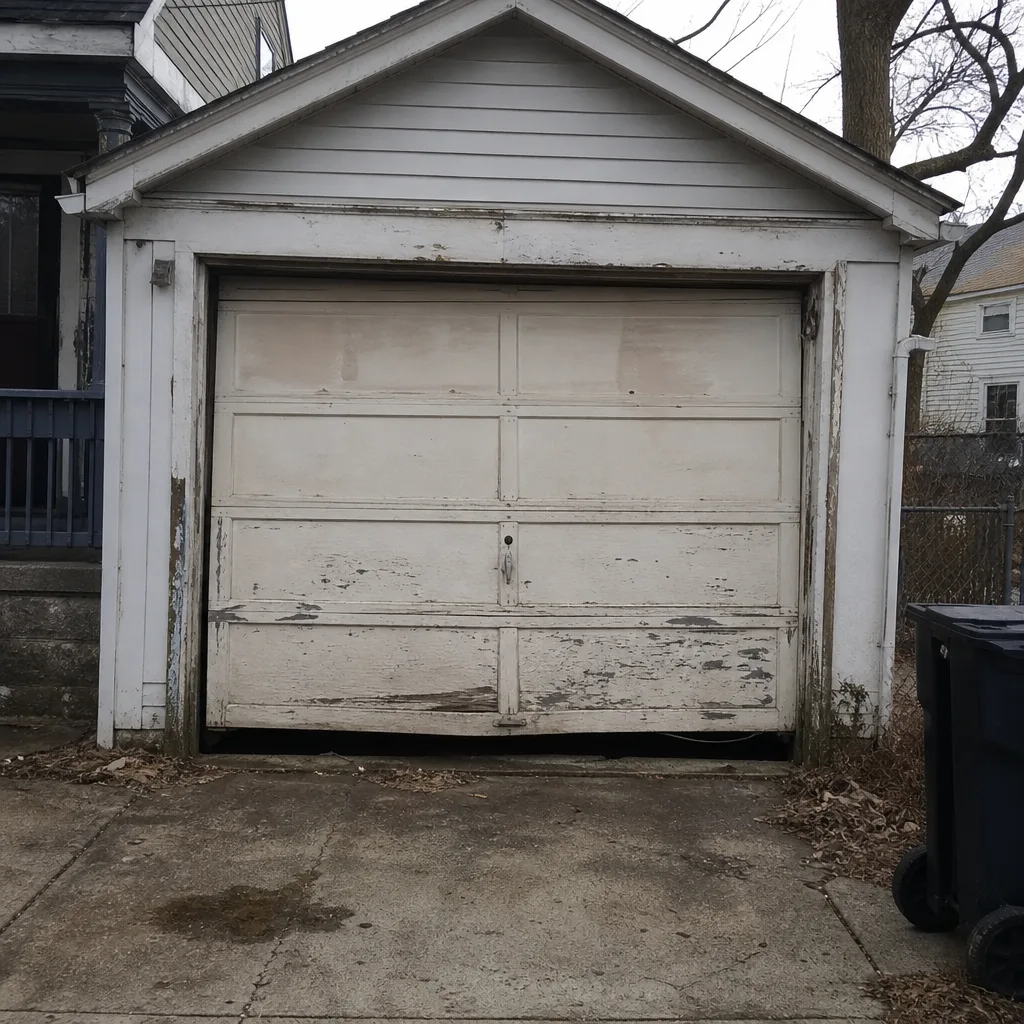 Before
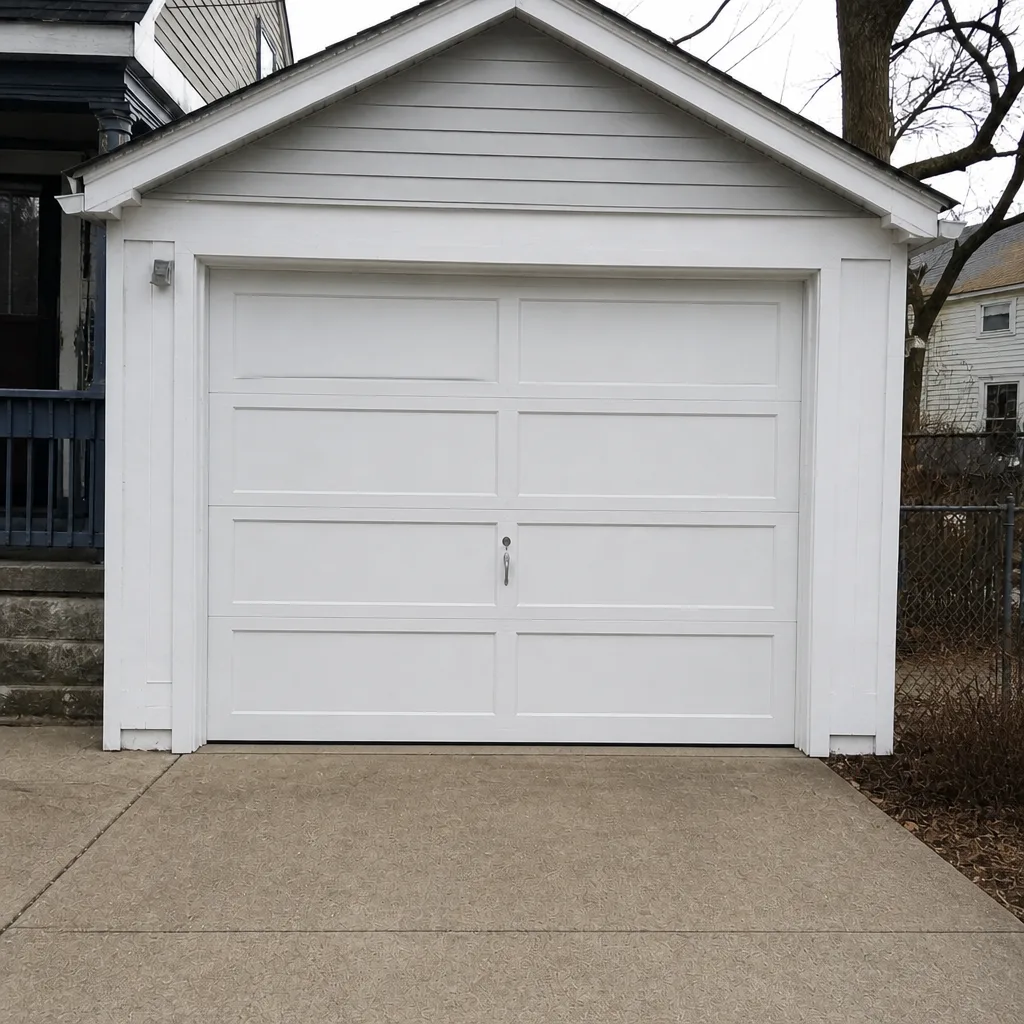 After
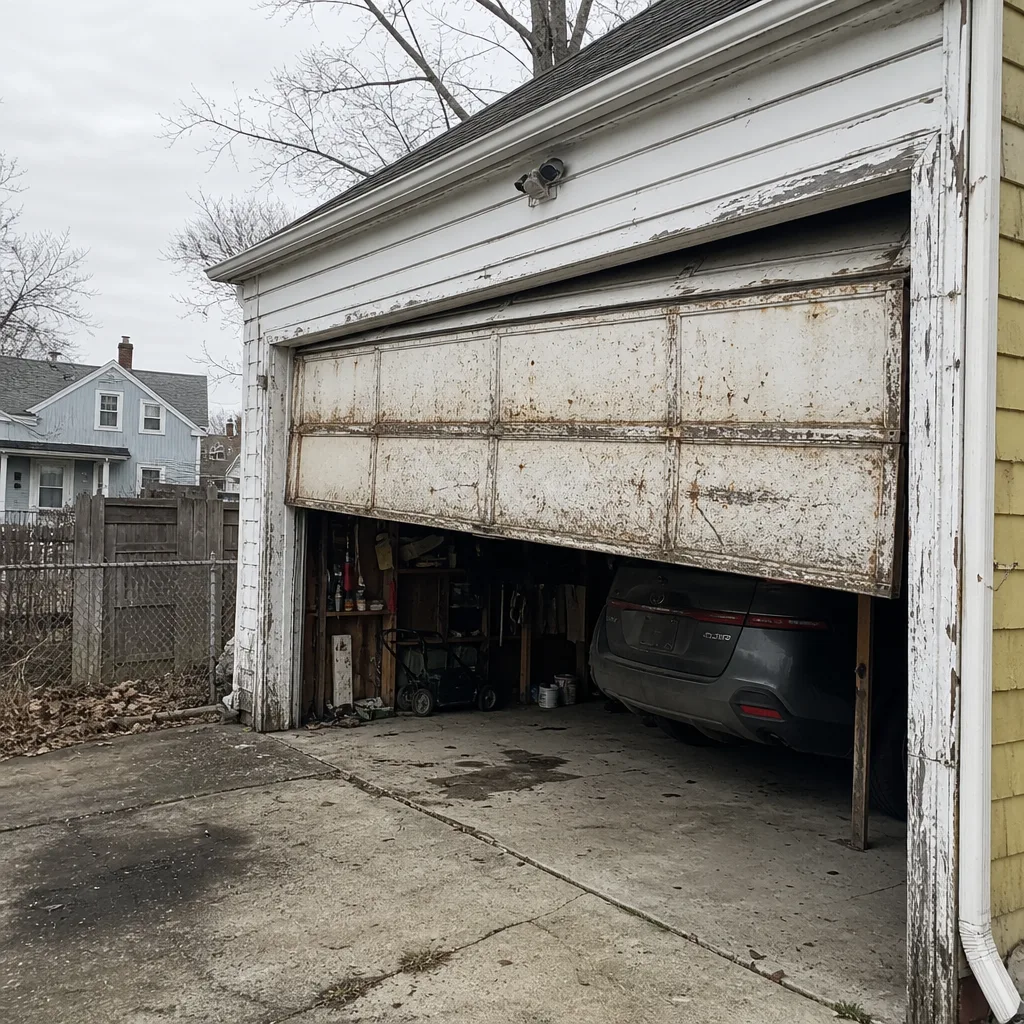 Before
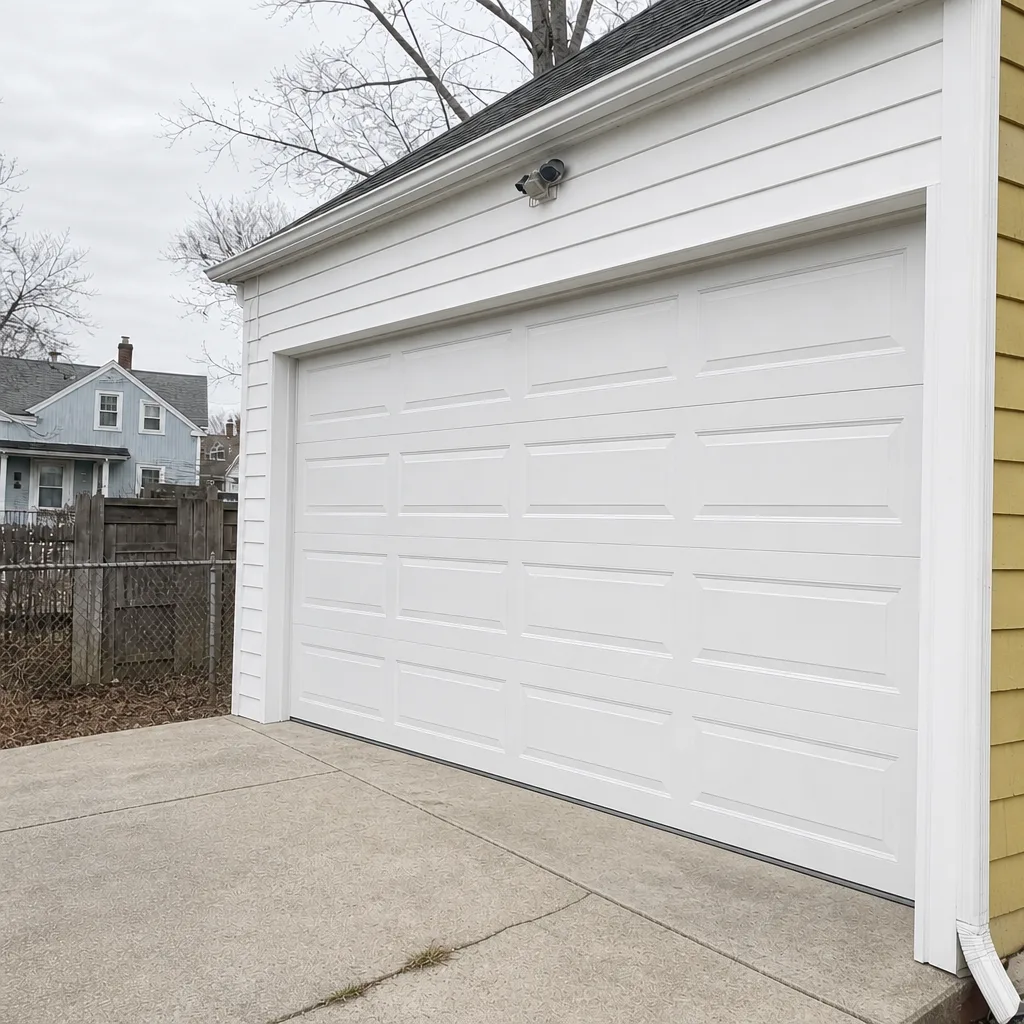 After
When to Call a Professional
Some jobs in Roslindale genuinely call for a specialist, and it’s worth knowing where that line is. Call us when a spring has broken or the door won’t lift, when a door comes off its track or hangs crooked, when the opener stops responding or the safety features fail, when your tracks are bent or your cables look worn, or when you’re weighing a full door replacement and want a real evaluation rather than a guess. Spring and cable work should always be handled by a trained technician. If you’re not sure whether it’s a repair or a replacement, that’s a good time to get an on-site opinion.
Roslindale Garage Door Repair offers free estimates in Roslindale – call (844) 944-1933 to get a straight answer on what your door needs and a written price before any work begins.
Frequently Asked Questions
Garage door repair in Roslindale typically starts around $150 to $350 for common fixes like springs, rollers, cables, or opener issues, with the exact price depending on the part and the door. A matched pair of springs costs about twice the single-spring range because both are usually replaced together. The written estimate sets the final price, and you’ll get it before any work starts. Call (844) 944-1933 for an exact quote – estimates are free.
Often yes – garage door replacement in Boston can require a permit even when the new door matches the old one, though the requirement depends on your property and the scope. Confirm with the City of Boston’s building department for your specific address before ordering. A specialist plans the permit into the job rather than treating it as a surprise. Call (844) 944-1933 if you’d like help understanding what your project needs.
Not always – older garages here often have low headroom, tight side room, or shallow depth that rule out standard configurations. The right fit might be a low-headroom track, a torsion setup in a specific configuration, or a side-mount opener. Only an on-site measurement tells you for sure. Call (844) 944-1933 for a free estimate and we’ll measure before recommending anything.
Both springs help lift your door, but they work differently – torsion springs run along a shaft above the door, extension springs run along the sides. The type affects how the door is balanced, what opener will work, and how the repair is done. It’s dangerous to service either yourself. Our technicians handle both types safely and can tell you which system your garage has.
Repair usually makes sense when the door’s structure is sound and just one part is failing – a spring, a roller, or the opener. Replacement generally makes more sense when the door is failing in several places, the material is worn out, or the repair bill nears a meaningful share of a new door’s cost. A specialist can evaluate it in person and give you an honest read. Call (844) 944-1933 for a free estimate.
We connect you with trained local professionals who are licensed and insured as Massachusetts requires. Our technicians have up to 14 years of experience, and they specialize in garage doors rather than general home repair. Every job starts with a written price you agree to before work begins. Call (844) 944-1933 to get started.
The Bottom Line
Garage door decisions in Roslindale come down to the building, not the brochure. Measure your headroom and side room before you shop. Match the door’s material and weight to your home’s era, and match the opener’s duty to the door. Plan for a Boston permit on a replacement, and treat the springs and cables as strictly hands-off. If your setup is failing in one spot, repair it; if it’s failing everywhere, replace it. Start with an honest on-site evaluation, a written price, and a trained technician, and the rest follows. Call (844) 944-1933 for a free estimate.
Written by the team at Roslindale Garage Door Repair.